
A few weeks ago, I sat at my desk building a workbook with 19 worksheets: a dashboard, a work breakdown structure, a procurement plan, a Gantt chart, a risk register, a log frame, a RACI matrix and more. I was not filling in a template someone else had built. I was writing the code, sheet by sheet, that would generate it.
Halfway through, I paused and thought, nobody taught me this exact thing in a lecture hall.
That moment captures something World Youth Skills Day asks all of us to consider: where do young people learn the skills they eventually apply in the world of work?
For me, the answer was not in a classroom. It was in a workbook nobody had built yet.
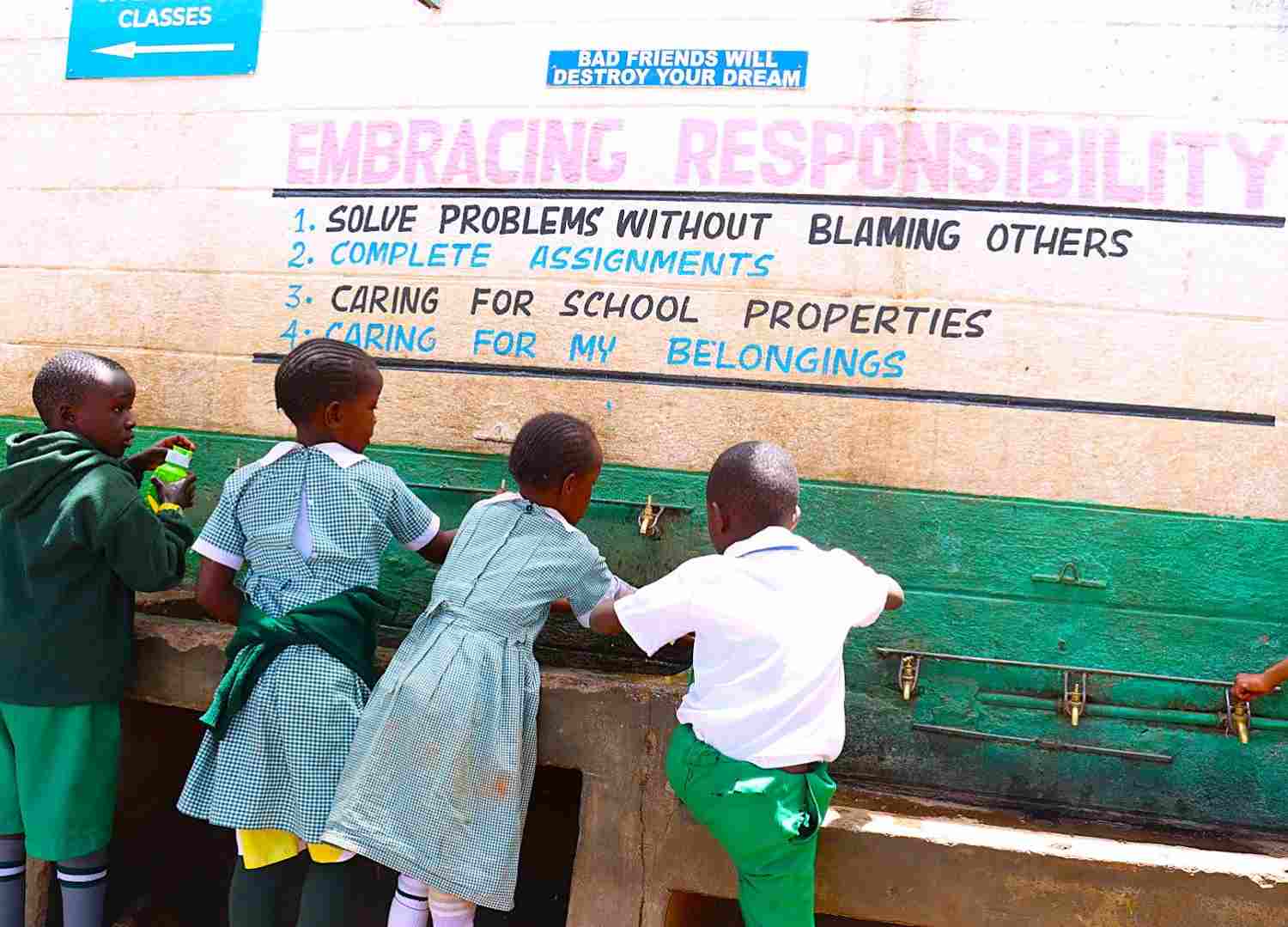
I joined Mizizi Elimu Afrika in May 2026 as an intern in the Knowledge, Data, AI and Impact Unit within the Research Department. On paper, my degree is in Project Planning and Management. In practice, my first major assignment was helping to build the project-management architecture for the Gemini AI Efficacy Study, a Google DeepMind-funded initiative piloting AI-guided learning in 15 junior schools in Nairobi County.
Nobody handed me a finished template. I had to think through the entire project lifecycle, what a field coordinator needs to track, what a finance manager needs to reconcile and what a risk register should anticipate before a problem becomes a crisis. I then had to translate all of that into a tool that real people, working on a real project with firm deadlines and a grant agreement, would use.
That is a very different kind of learning from sitting an exam. An exam tests whether you understand the theory. The workbook was where that theory met its first real test, an active project, a field team and schools in Nairobi.
Skills nobody puts on a syllabus
If I am honest about what this internship has taught me, very little of it fits neatly into the subjects I studied at university. I have learned to:
Balance structure and flexibility. I had to build tools rigorous enough for a Google DeepMind-funded study, yet adaptable enough for a field team encountering AI-guided learning for the first time.
Manage systems, not merely tasks. Jira, Microsoft Planner and SharePoint are more than software. They are part of the invisible infrastructure that determines whether a team working across different locations remains aligned and on course.
Show up prepared for rooms I was not expecting to lead. When I was asked to facilitate workshops and breakout sessions at a global symposium on educational frameworks and climate change, I realised that expertise is not always about seniority. Sometimes, it is about who did the reading and built the presentation.
None of these were exam questions. All of them were essential skills for a real workplace.
Learning in public and in real time
World Youth Skills Day exists because there is a persistent and uncomfortable gap between what young people are taught and what the world of work expects of them. I have experienced that gap directly.
I did not arrive at Mizizi Elimu Afrika knowing how to write Python scripts that generate Excel workbooks matched precisely to an organisation’s house style, down to its fonts and colour palette. I learned because the project required it. There was no option to say, “I will figure this out later.” The deadline was immediate, and the workbook needed to exist.
That, I think, is the real skill this generation is being asked to develop, not mastery of a single tool, but the confidence to learn under pressure, deliver with what they have learned and trust that the knowledge will hold.
Why this matters beyond my desk
Mizizi Elimu Afrika works to transform education systems across Africa. One of the quiet truths within that mission is that the interns and young researchers doing the less visible work, the risk registers, log frames, knowledge-management systems and products are also the people who will eventually influence how evidence is used, how systems are built and whether foundational-learning reforms survive contact with reality.
If organisations like ours are serious about systems change, we cannot invest only in the visible, senior layer of decision-making. We must also invest in the intern building a workbook at 4 p.m. on a Thursday, because that is where the next generation of practitioners is being formed.
A question worth considering
World Youth Skills Day is not simply asking, “What skills do young people have?” It is asking a harder question: who is willing to hand a young person a real problem, with real stakes, and trust them to build an answer?
I was handed that problem in May. I am still building the solution.
What problem have you entrusted to a young person recently, and what did they build with it?