As the world marks World Values Day, Kenya has a chance to make values a deliberate part of every classroom.
Every school in Kenya teaches values, whether it means to or not. A teacher who greets learners by name, a prefect who talks a classmate out of a fight and a head teacher who treats the cleaner with respect are all teaching. The question is whether we leave that teaching to chance.
In April, the Kenya Institute of Curriculum Development (KICD) and Mizizi Elimu Afrika launched nationwide implementation of Values-Based Education (VbE), to be rolled out in regular and special needs schools across all 47 counties. KICD’s Chief Executive Officer Prof Charles Ochieng Ong’ondo (MBS) noted that, while the institute has concentrated on rolling out Competency-Based Education, this is the first time it has launched a dedicated values programme.
The case for it rests on evidence, and the most telling evidence concerns what happens when values are left informal. A baseline survey by KICD and the Action for Life Skills and Values in East Africa (ALiVE) found that many learners showed respect and teamwork in daily school life, yet most struggled to explain what values are or how they connect to education. In most schools visited, there was no formal structure for nurturing values, and practice depended on individual teachers or on activities such as sports and clubs. Children were picking up values, but unevenly and without the words to name them.
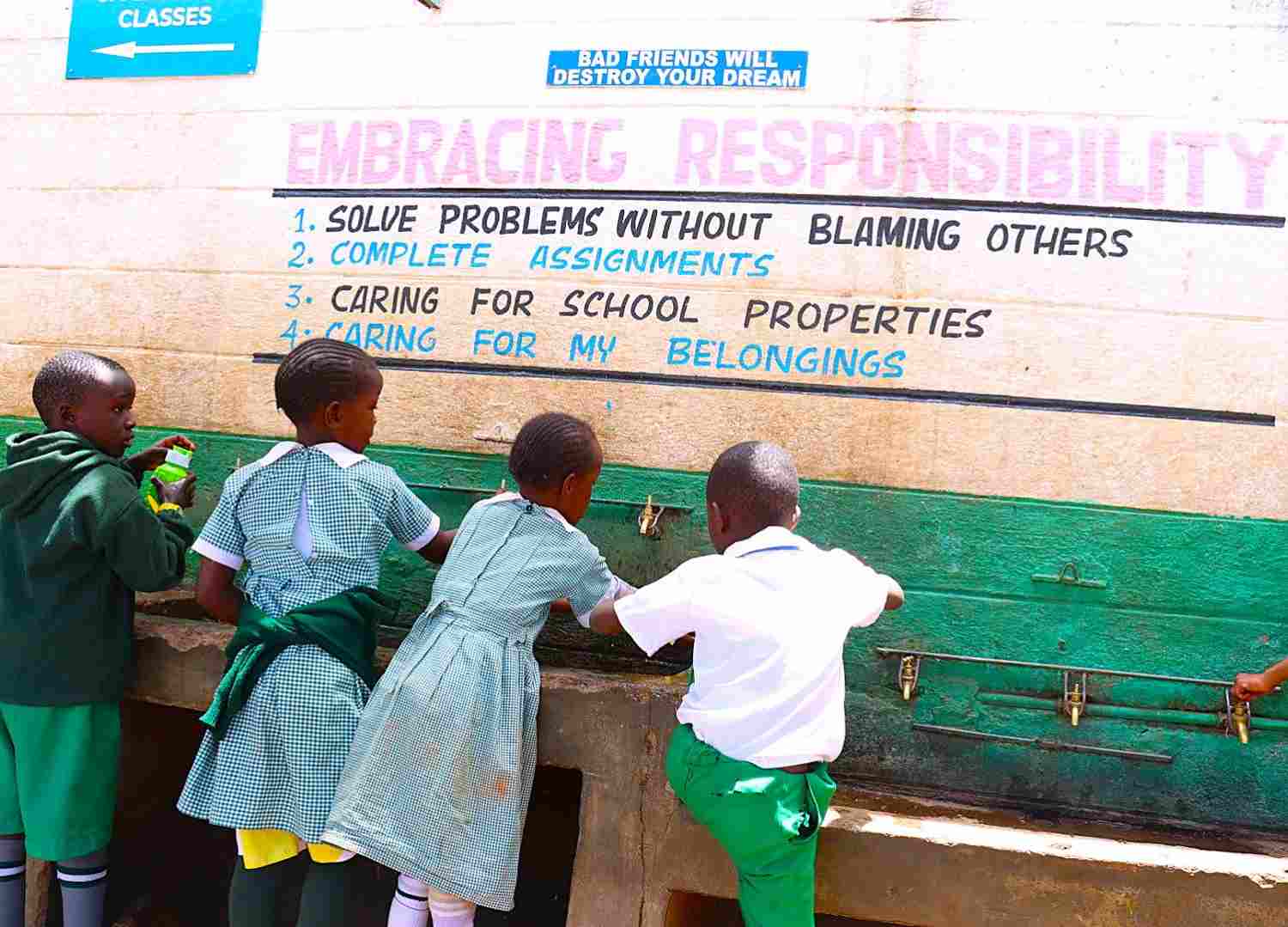
The pilot that preceded the national rollout suggests what changes when schools take a deliberate approach. It covered 19 counties, 79 schools and more than 3,000 learners. Schools reported better learner behaviour, stronger discipline, closer teacher-learner relationships and a more positive school climate. The methods credited were not lectures. Co-curricular activities, structured routines and teacher role modelling did the work of building cooperation, respect and responsibility.
The pilot also shows that values cannot be left to the classroom teacher alone. In special needs schools, ALiVE found that dormitory matrons, caregivers and other non-teaching staff were central in shaping learners’ behaviour, especially when teachers were absent, and that the hidden curriculum was the most influential source of values learning. This is why the programme promotes a Whole School Approach, in which every adult on the compound is a values educator.
Mizizi’s Vision 2040 is built on the idea that strong education systems begin with strong foundations: literacy, numeracy, life skills and values. Our Executive Director, Dr John Mugo, argues that children who read with understanding, reason with numbers and develop life skills and values early gain the confidence and agency to shape their own futures. Those foundations matter: more than half of candidates scored D+ or below in the 2024 KCSE. A child who feels safe, respected and responsible is better placed to learn.
World Values Day is a moment to turn commitment into practice. Teachers need training, and more than 400 have been trained by KICD na Mizizi so far, a small share of the profession. Schools need materials in forms every learner can use, including pictures and braille for those who cannot rely on words. Parents need to be partners rather than spectators. Values cannot be examined like algebra, but they can be observed, practised and improved.
Kenya’s Constitution names the values it hopes its citizens will live by. Our classrooms are where most of them will first learn what those values look like.