Error analysis helped Geoffrey, a teacher in Bungoma County, turn around his maths class. Teachers who learn to treat children’s mistakes as diagnostic clues can help them close the gaps. But experts say teachers should be prepared to diagnose learning, read the curriculum and design sound assessments from the start, not years into the job.
Geoffrey, a teacher in Lwandanyi zone, Bungoma West Sub-County, was worried about his class. ‘My class was poorly performing in mathematics, especially in addition and subtraction,’ he says.
He was not alone. When the Centre for Mathematics, Science and Technology Education in Africa (CEMASTEA) and Mizizi Elimu Afrika assessed 405 Grade 2 and 3 learners in five Lwandanyi schools in October 2024, only 3 per cent answered all the addition and subtraction questions correctly. Just 17 per cent got every addition item right, and 7 per cent every subtraction item. Most mistakes were factual errors in basic number facts. Many children were still counting by drawing strokes or dots (61 per cent in Grade 2 and 49 per cent in Grade 3), and only 6 per cent of Grade 2 and 30 per cent of Grade 3 learners recognised place value.
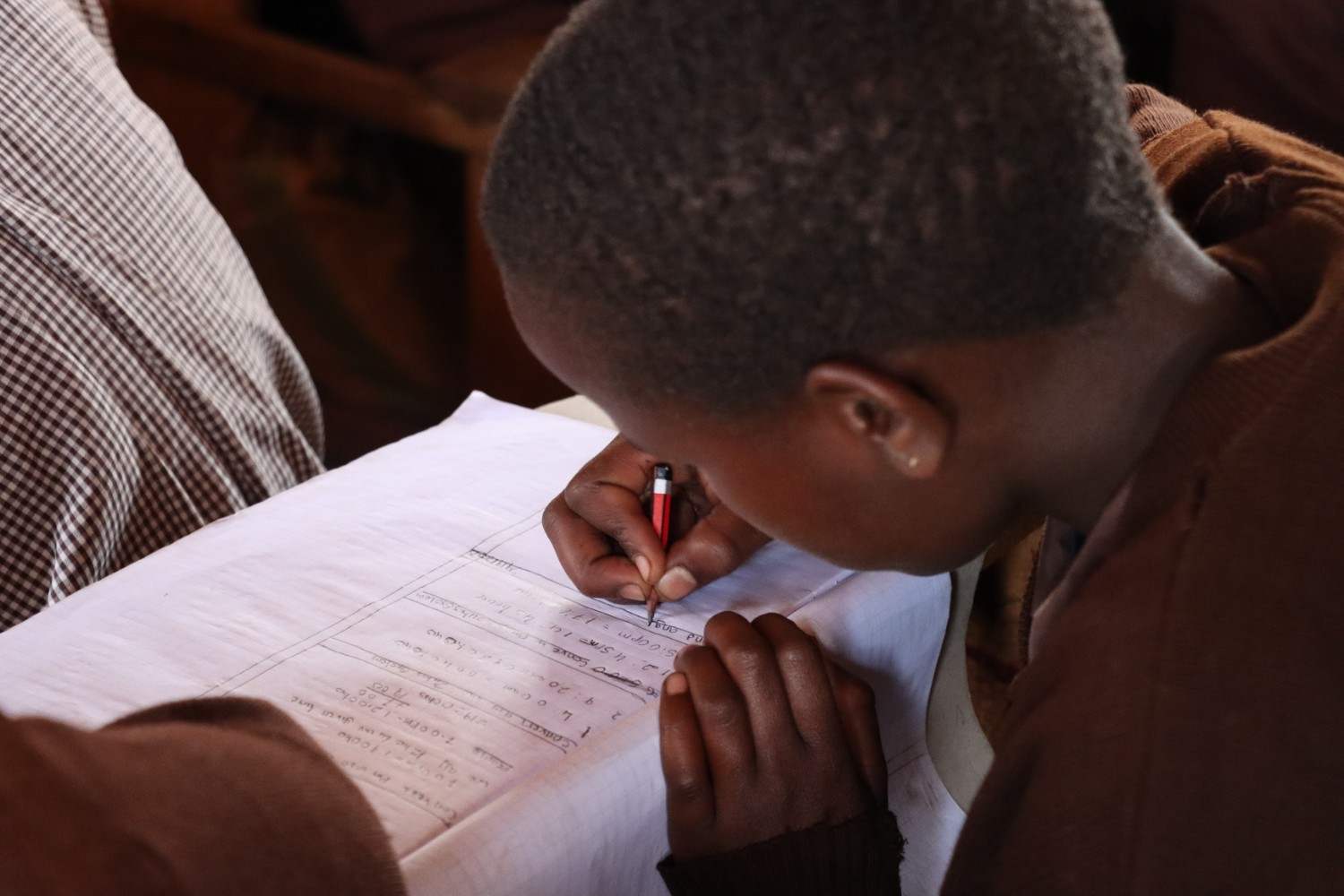
Early last year Geoffrey joined the Error Analysis Initiative, which trained teachers to study the mistakes children make in early-grade numeracy and to find the misconception behind each one. ‘Error analysis took me to the level of the learner… to identify the root cause of the mistakes, misconceptions, and misunderstandings of the children,’ he says.
He reported a ‘drastic improvement’ in number sequences, number recognition, addition, subtraction and regrouping. ‘All the knowledge that we acquired in error analysis, I came to apply,’ he says.
The initiative, ran in Bungoma West by CEMASTEA and Mizizi Elimu Afrika, trained Grade 2 and 3 teachers to use learners’ errors as diagnostic tools. It strengthened teachers’ use of formative assessment and helped them tailor lessons to specific misconceptions and learning needs.
Teacher preparation shapes everything
But gains like these should not depend on a short in-service programme. Education leaders say the answer lies upstream. Dr Samuel Marigat, the Teachers Service Commission (TSC) Regional Director for Nairobi, argues that the quality of early numeracy depends not only on what children are taught but on how well teachers are prepared, how deeply they understand the curriculum and whether they can assess learners accurately.
The stakes are long-term. ‘If we front weak teachers in foundational learning…they will have a terrible effect on learners in the future,’ says Dr Marylin Rono, a teacher educator at the University of Embu. Her recommendations, together with the lessons from Bungoma West, point to eight priorities:
Start with the trainers, through the ‘sensitisation of all teacher educators across the country’, so that those who train teachers share an understanding of foundational learning, the Competency-Based Curriculum, curriculum design and appropriate assessment.
Make foundational numeracy a core part of pre-service training, including how young learners develop concepts and misconceptions.
Build formative assessment and error analysis into teacher preparation, so the skills tested in places like Bungoma West are not left to short in-service courses.
Teach teachers to read a curriculum design, including its learning progression and what belongs at each level.
Build assessment-design skills, so teachers can write grade-appropriate, curriculum-aligned tests with clear outcomes and the right level of cognitive demand.
Reduce dependence on unsuitable commercial assessments by supporting schools to develop or access quality tools.
Join teacher education to continuous professional development, with universities and training colleges playing a stronger part in ongoing support.
Treat foundational learning as a policy priority. ‘We should get it right at foundation level and take to the classrooms teachers who are adequate, teachers who have the capacity, and teachers who understand the curriculum design.’
Geoffrey’s story and Dr Rono’s recommendations point the same way. Error analysis asks teachers to look closely at what children write and to treat a mistake as information. Kenya's classrooms need teachers who understand the curriculum, can find out why a child is stuck, and can build a fair test. Those skills should be built before a teacher first stands in front of a class, not left to chance afterwards.