A first look in the mirror
Kenyan 15-year-olds scored an average of 278 points in computational problem solving in PISA 2025, against an OECD average of 500. This was Kenya's first time taking part in PISA. The new domain, part of PISA's Learning in the Digital World assessment, asked students to solve problems with block-based programming and modelling tools, and to break problems into steps, run experiments, analyse data, and build and debug digital artefacts.
Kenya was also placed last of 88 systems on PISA's index of preparedness for digital learning. This article argues that computational problem solving and AI education cannot advance at the pace national policy expects, because teachers and schools are not yet equipped to deliver them. The evidence comes from a new Kenya Education Management Institute (KEMI) study of junior schools in Meru County, corroborated by six further studies from Kajiado County (Kajiado North), Machakos County (Matungulu), Homa Bay County (Rangwe), Nairobi City County (Westlands), Meru County (Tigania West) and Kisii County (Gucha South), and by national survey data.
The teacher is the bottleneck
Rural public-school teachers in Meru County scored 46.8% on digital competency, compared with 66.3% in urban public schools and 79.1% in urban private schools. These figures come from a study published in August 2026 that surveyed 284 teachers and 52 principals across 52 junior schools.
The training gap is wider still. Urban private-school teachers attended an average of 4.7 ICT training sessions in the previous year, while rural public-school teachers attended just 0.6. More than half of rural teachers (58%) had never received any ICT training, compared with 6% in urban private schools. One principal explained that training is held in Meru Town, and the school cannot afford to send teachers there for a week.
Computational problem solving asks a teacher to model debugging, guide open-ended experimentation and interpret learner data. A teacher who scores below 50% on basic digital competency and has never been trained cannot be expected to teach these skills.
The pattern is the same across counties
Six other county studies, published between 2023 and 2026, reach the same conclusion.
In Kajiado North, Ndemo, Mwalw'a and Nduku (2026) surveyed 99 junior school teachers. Three in four (75.8%) lacked the knowledge to use the ICT tools available, 76.8% had no technical support, and 69.7% cited a lack of electricity.
In Matungulu, Machakos County, Nzekele, Kimamo and Omundi (2026) found that teachers rated their own ICT competence much higher than their learners experienced it, and eight of nine principals said their school had no ICT policy. This suggests that self-reported scores, including those in Meru, may flatter reality.
In Rangwe, Homa Bay County, Nyamboki, Areba and Oranga (2026) found that the skill teachers rated highest was simply switching a computer on, while troubleshooting and teaching with presentation tools scored lowest. The authors note that many teachers rely on cyber cafés to submit ICT tasks, and cite a TSC survey in which 84.2% of teachers lacked the skills to integrate ICT.
In Westlands, Nairobi, Opicho, Imonje and Chepkonga (2025) found the reverse problem. Teachers reported being trained, but 60% said computers were available in their school only to a little extent. Even in the capital, training has reached teachers but devices have not.
In Tigania West, Meru County, Ngaya, Omae and Thuranira (2024) found that 56.6% of secondary teachers lacked basic technology skills. Most of those with training had learned at a commercial college.
In Gucha South, Kisii County, Ongwenyi, Mumo and Mueni (2023) found that 63.6% of teachers had no ICT integration training, 84% of ICT teachers reported no internet in school, and only seven of 49 schools had functional computers. Some schools taught Computer Studies, the closest existing subject to computational problem solving, without a single trained ICT teacher.
Across seven studies in six counties, the evidence points the same way. Training is scarce and uneven, devices are too few and poorly maintained, connectivity and power are unreliable, and teachers' confidence often exceeds what learners see.
The national picture
National evidence confirms that these are not local problems. A 2025 survey by the Kenya National Bureau of Statistics and Usawa Agenda of 339 secondary schools found that only 40% had a functional computer lab, that just half of those labs had internet, and that 52 students shared each computer on average. Only 24.6% of secondary teachers had received digital literacy training.
Primary schools tell the same story. In a survey of 351 public primary school teachers, Murithi and Yoo (2021) found that 87.7% of schools lacked internet, 73.5% of teachers had no access to the government laptops, and 80% taught in classrooms without power sockets. Although 77.7% had received basic computer training in college, two in three (66.4%) had never attended in-service ICT training, and 58.4% said they could not plan and integrate ICT in their teaching. Yet almost all (98.9%) believed technology would make learning more learner-centred. The will is there; the support is not.
Not enough machines, not enough connection
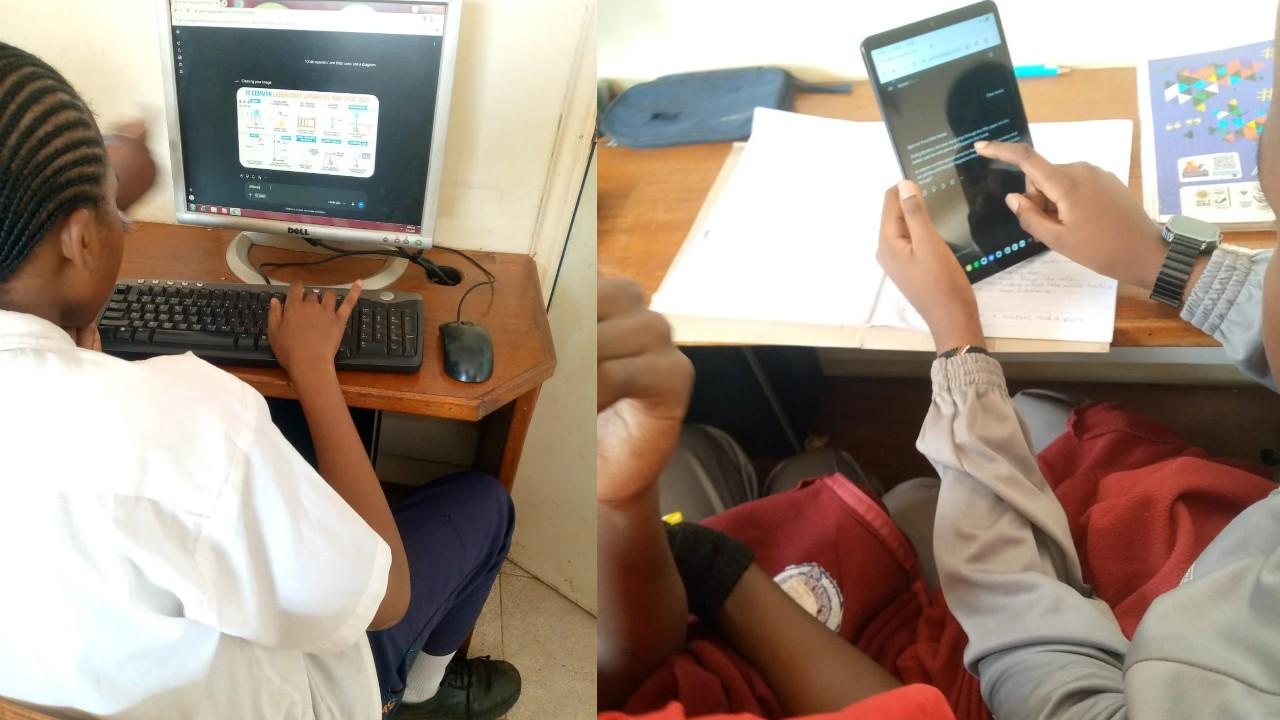
A rural public junior school in Meru County has an average of 6.8 working devices, so more than 22 learners share each one. Urban private schools have about four learners per device. Every urban private school in the KEMI study had internet access, but only 26% of rural public schools did, and just 12% had a reliable connection. More than a third of rural schools (37%) lost power for over four hours a day.
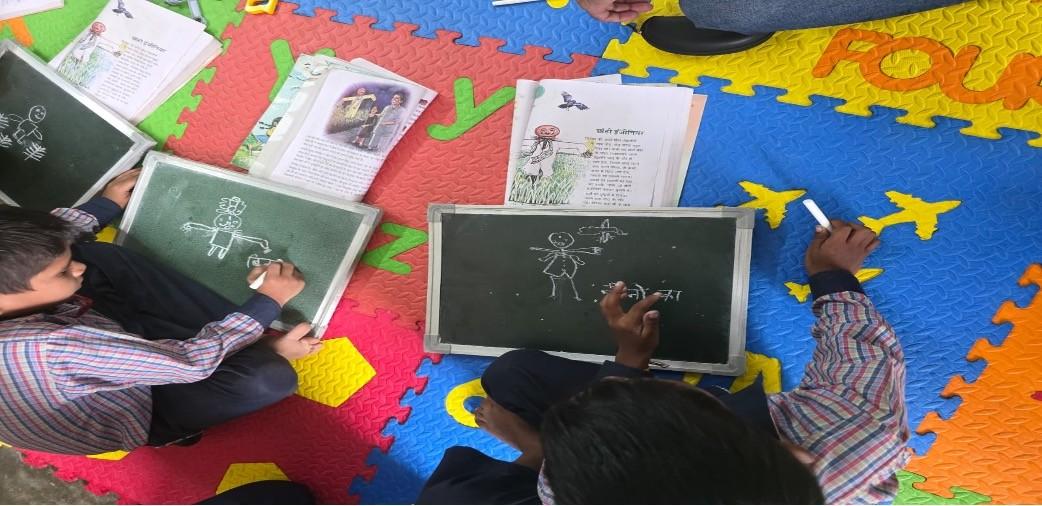
Computational problem solving is learned by doing: writing instructions, running them, watching them fail, and fixing them. At 22 learners per device, each learner might get two minutes of hands-on time in a 40-minute lesson.
We have been here before
Kenya has spent a decade learning that devices without teachers and maintenance do not change classrooms. The Digital Literacy Programme began rolling out in 2016, with a plan to deliver 1.2 million devices to more than 22,000 public primary schools. The Auditor General later reported that the ICT ministry could not account for Sh16.3 billion spent on the programme, and the Teachers Service Commission reported that more than 80% of teachers had knowledge gaps in ICT. In the KEMI study, rural schools in Meru that received government devices reported that fewer than 40% still worked.
Staffing compounds the problem. A July 2025 sector report found a national shortage of about 100,000 teachers, with only 21% of public junior school teachers trained in STEM and 35% of those schools lacking a single STEM teacher. The government's plan to train 42,000 teachers in coding with Google is welcome, but it covers only a fraction of the workforce, and training rarely reaches the rural schools that need it most.
AI ambitions meet the same wall
The Kenya Artificial Intelligence Strategy 2025–2030 aims to make Kenya a regional leader in AI, and the government plans to connect all schools to the internet by 2030. That date is the core of the problem: the strategy expects AI skills to grow over the same five years in which many schools will still be waiting for a connection. AI literacy depends on the same foundations as computational problem solving: a trained teacher, a working device and a reliable connection.
The foundations beneath digital skills are also weak. Only 16% of Kenyan students reached the baseline level in science in PISA 2025, against an OECD average of 74%. The risk is a two-tier system in which learners in well-resourced private schools gain AI and coding skills, while most public-school learners are assessed on skills they were never given the means to learn.
What would change the pace
Five priorities stand out.
First, train teachers where they work, replacing week-long workshops in county towns with school-based learning communities and trained ICT mentors, as the KEMI study proposes. Second, design for rural reality, with training built around offline teaching, shared devices and low-bandwidth content; unplugged approaches such as the screen-free coding series launched in 2025 can build computational thinking while devices remain scarce. Third, set and fund minimum standards, including no more than 10 learners per device, reliable power and stable connectivity in every junior school. Fourth, buy maintenance, not just machines, so that every contract includes repair and technical support. Fifth, keep assessment fair, allowing digital and paper pathways until infrastructure catches up.
Kenya's first PISA result in computational problem solving is not a verdict on its learners; it measures what they have been given. When most rural teachers have had no ICT training and 22 learners share one device, computational thinking and AI literacy will spread slowly and unequally, whatever the strategy documents say. The ambition is right. The timeline is not. Closing the teacher capacity gap first is the fastest route to the digital future that Kenya's policies describe.
References[SR1]
Baariu, I. M., Gachoki, C. M. and Wanjiku, S. (2026). ICT Equity and the Digital Divide in Competency Based Curriculum Implementation: Evidence from Junior Schools in Meru County, Kenya. KEMI Journal of Educational Leadership and Management, 2(2).
Daily Nation. Audit raises eyebrows on Sh16 billion for tablets.
Daily Nation. Big hurdles thwart Jubilee's laptops plan.
HapaKenya. New report sounds alarm on Kenya's education sector.
Kenya National Bureau of Statistics and Usawa Agenda (2025). Is Our Secondary School System Inequitable by Design? Reported in Eastleigh Voice: Only 40% of Kenya's secondary schools have computer labs.
Ministry of ICT. Digital Literacy Programme rollout announcement.
Murithi, J. and Yoo, J. E. (2021). Teachers' use of ICT in implementing the competency-based curriculum in Kenyan public primary schools. Innovation and Education, 3(5).
Ndemo, R. K., Mwalw'a, S. and Nduku, E. (2026). Understanding the Challenges of ICT Policy Implementation in Teaching and Learning among Public Junior School Teachers in Kajiado North Sub County, Kenya. International Journal of Social and Development Concerns, 36(3).
Ngaya, N. M., Omae, H. and Thuranira, M. (2024). Evaluation of Teacher Training in Integration of ICT in Teaching Public Secondary Schools in Tigania West, Meru County, Kenya. International Journal of Research and Innovation in Social Science.
Nyamboki, S., Areba, G. N. and Oranga, J. (2026). Attitude and Self Efficacy as Determinants of ICT Integration in Implementing Competency Based Education in Junior Schools, Rangwe Sub County, Homa Bay County, Kenya. Journal of the Kenya National Commission for UNESCO, 6(2).
Nzekele, J., Kimamo, G. and Omundi, E. (2026). Influence of Teacher ICT Competence on Learner Engagement in Public Junior Schools in Matungulu Sub County, Machakos County, Kenya. International Journal of Social and Development Concerns, 35(7).
OECD (2026). PISA 2025 Results (Volume I): Kenya country note.
OECD. Education GPS: Kenya, student performance in PISA 2025.
OECD.AI. Kenya Artificial Intelligence Strategy 2025–2030.
Ongwenyi, E. N., Mumo, R. M. and Mueni, W. (2023). Factors Influencing ICT Integration in Teaching and Learning in Public Secondary Schools in Gucha South, Kisii County, Kenya. Journal of African Interdisciplinary Studies, 7(4).
Opicho, E. N., Imonje, R. and Chepkonga, S. (2025). Teachers' Digital Literacy Skills and Implementation of Competency Based Curriculum in Junior Schools in Westlands Sub County, Kenya. International Journal of Current Science Research and Review, 8(4).
Rest of World. AI teaching tools spread in Kenya as teacher shortage worsens.
The Standard. 42,000 teachers to be trained as State rolls out coding curriculum.
The Standard. Kenya pioneers coding lessons without computers.
[SR1]Reference list tidy-up before publishing: (1) OECD Education GPS is listed but never cited in the text, so either cite it or remove it. (2) Daily Nation (x2), HapaKenya, Ministry of ICT, Rest of World and The Standard (x2) have no year; add years to match the academic entries. (3) The KEMI link goes to …/view?a=… in the body but …/read?a=… here. Please check both and use one.