
After many classroom visits, I carry with me a growing appreciation of the care required to write for children. Watching children engage with a page, listening to their responses and observing teachers guide their learning continually bring me back to one conviction: writing for children is not merely an act of thought. It engages both mind and soul. It calls for intellectual care, empathy, and a willingness to enter the child’s world.
When we write, we must think deeply about what children will encounter on a page, how they will experience it and what it will help them understand. Classroom visits give these questions meaning. They remind me that every resource eventually reaches a child whose attention, confidence, and understanding deserves care.
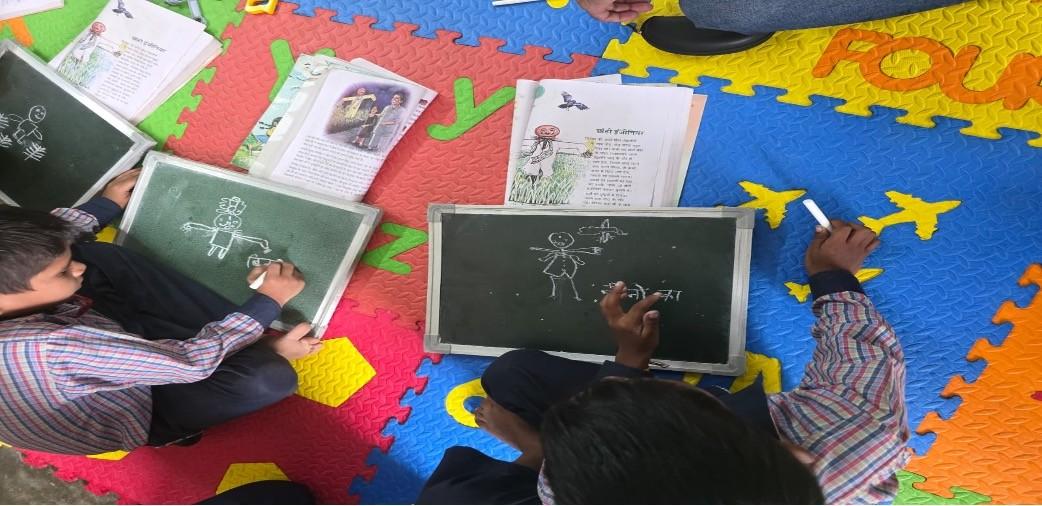
During one visit, I sat through a literacy lesson in which children were reading about a scarecrow. They were then asked to draw the scarecrow on their slates. That simple movement from reading to drawing stayed with me. The children had an opportunity to engage with an idea and represent it through their own actions.
From words to understanding: a child’s drawing creates an opportunity for children to show their understanding, and for teachers to explore it and give feedback.
I carry this moment alongside many others from classroom visits. Together, they keep returning me to a question that should remain with everyone who writes for children: What resource are we putting in the hands of the child and the teacher as true support for learning?
A resource should help build a concept. Its language, pictures, and instructions should make the learning accessible, so that children can direct their attention to the idea being introduced. Children should not have to struggle to interpret what the page is asking them to do.
Writing through a child’s eyes
One lesson I carry with me is the importance of using a child’s lens in every writing decision. Language matters. Presentation matters. Sequence is critical. A writer must consider what the child already knows, what comes next, and how each step prepares them for the following one. Instructions need to be clear, short, and procedural. Give children an understandable starting point, followed by manageable actions in a logical order. Pictures should support meaning, and the page should provide enough space for children to see, think, and respond.
As we write, we should pay particular attention to children who are approaching expectations. Children already meeting or exceeding expectations should not become our default reference point for the language, pace or complexity of a resource. I find it useful to ask whether a child who is still developing the intended skill can begin the task and make progress with appropriate support. This requires thoughtful steps towards the learning goal, while still providing opportunities for further challenge for those who are ready.
Thirty minutes that require intention
A foundational learning lesson lasts 30 minutes. Within that time, we introduce new knowledge and help children make sense of it. Classroom visits remind me how much we ask of this short period. This time limit requires us to be purposeful, but it should not rush us past understanding.
During those 30 minutes, we need to capture learners’ attention and appeal to their curiosity. We must also protect time for them to undertake the tasks that foster learning. A carefully chosen activity deserves enough time for children to attempt it, receive support, and reflect on what they have done.
The familiar saying, “What I do, I understand,” continues to resonate with me. It reminds us to give learners an active role. The task must connect directly to the concept, and the teacher must be intentional about ensuring that every child participates. Learner tasks are the core of the lesson.
Four intentions I carry into writing
These reflections lead me to four intentions that should shape the art of writing for foundational learning.
1. Capture the child’s mind in a fun way.
A familiar situation, a playful question, an interesting picture, or a short story can invite children into learning. The enjoyment should connect to the concept and give children a reason to participate. In the scarecrow lesson, the reading and drawing offered connected ways to engage with the same idea. I carry with me the importance of asking what will make a child want to enter the learning experience.
2. Strengthen concept retention through learner tasks.
Children need opportunities to use what they are learning. Drawing, arranging, telling, matching, building and demonstrating can all serve a purpose when selected carefully. The writer should be able to explain how each task helps children revisit and strengthen the intended concept. When I reflect on a resource, I want to be able to picture what the child will do and how that action will support learning.
3. Evaluate understanding through a simple but accurate assessment.
Every activity should give the teacher a way to check what the child understands. The assessment may be a brief question, a demonstration, or a carefully chosen task. It must check the intended concept. A completed drawing, for example, can begin a conversation, but asking the child to explain it provides further evidence of understanding. The teacher guide should clarify what to look for and how to respond when a child needs support. The scarecrow drawings remind me to look beyond completion and remain curious about the meaning a child has made. What did the child take away from the 30 minutes of engagement?
4. Create motivation to practise the new concept.
A resource should leave children willing to try again. Achievable challenges, encouraging feedback and varied opportunities to apply an idea can give practice a sense of purpose. Children should be able to recognise their progress and feel that another attempt is worthwhile. As a writer, I want to keep asking: Did the page give the learner a reason and the confidence to continue?
Supporting the teacher who brings the page to life
My reflections also return me to the teacher. The child’s resource and the teacher’s guide should be written together. The guide needs to make the learning intention clear, explain the sequence, and show how to support children as they work. It should identify useful questions, likely difficulties, and simple ways to assess understanding. It should also help teachers plan within the lesson duration while remaining attentive to learners’ responses. If children are struggling, the guide should offer a practical next step. If they are ready to proceed, it should show how the next task builds on what they already understand.
After many classroom visits, this is what I carry with me: writing for children asks us to put our minds into the design and our hearts into understanding the learner. Each page carries the responsibility to invite a child into learning, support the development of a concept, and give them the confidence to continue. That responsibility is what makes the work both an art and an intentional act of teaching.