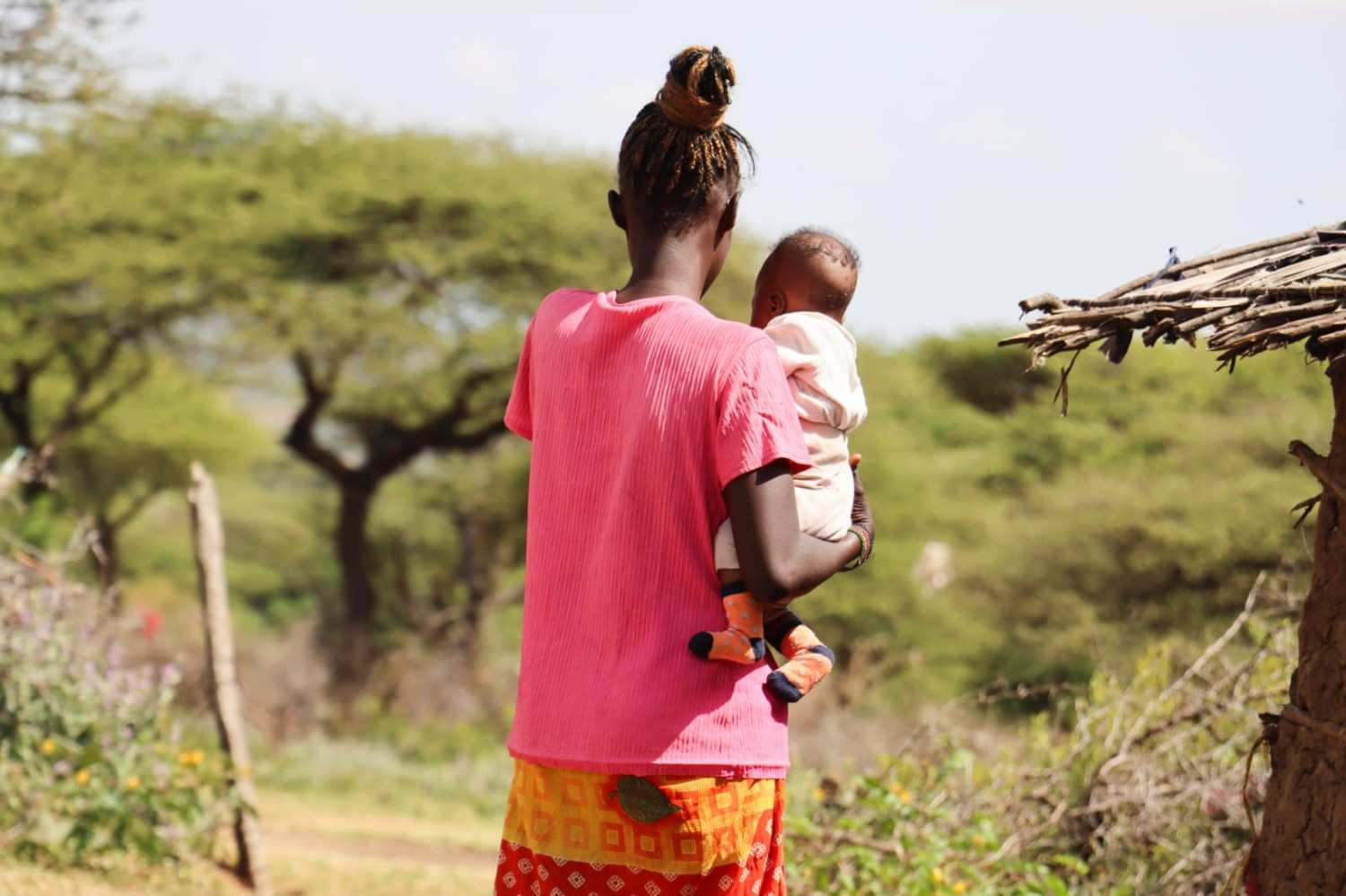
At just 14 years old, Mercy is raising a two-month-old baby with limited support. After becoming pregnant, she was forced to leave her family home and now lives in a small room offered by a community member in Natiti Village, Samburu County. Like many adolescent mothers, Mercy faces daily challenges in accessing childcare, education, and opportunities to build a secure future for herself and her child.
With no stable source of income, Mercy spends her days seeking casual work while caring for her baby. The absence of a reliable support system makes it difficult for her to consider returning to school or pursuing opportunities that could improve her circumstances.
Mercy’s story reflects the realities faced by many adolescent mothers in Samburu County. It highlights how poverty, limited childcare options, and lack of family support can prevent young mothers from continuing their education and achieving their full potential.
To address these challenges, Mizizi Elimu Afrika, in partnership with the County Government of Samburu, the Ministry of Education, the State Department for Children Services, and other stakeholders, initiated the co-creation of a childcare model designed to support adolescent mothers and their children.
The process included a two-day immersion, during which researchers spent time with adolescent mothers, their children, families, and community members to better understand their lived experiences. Insights from the immersion will inform the development of a practical and sustainable childcare model that enables young mothers to continue learning, thrive, and build brighter futures for themselves and their children.
The initiative is important in arid and semi-arid regions, where educational inequalities remain significant. Evidence shows that learners in Kenya’s arid geographies are far more likely to miss foundational learning opportunities than their peers in urban and rural agricultural regions, underscoring the need for holistic solutions that support both children and caregivers.