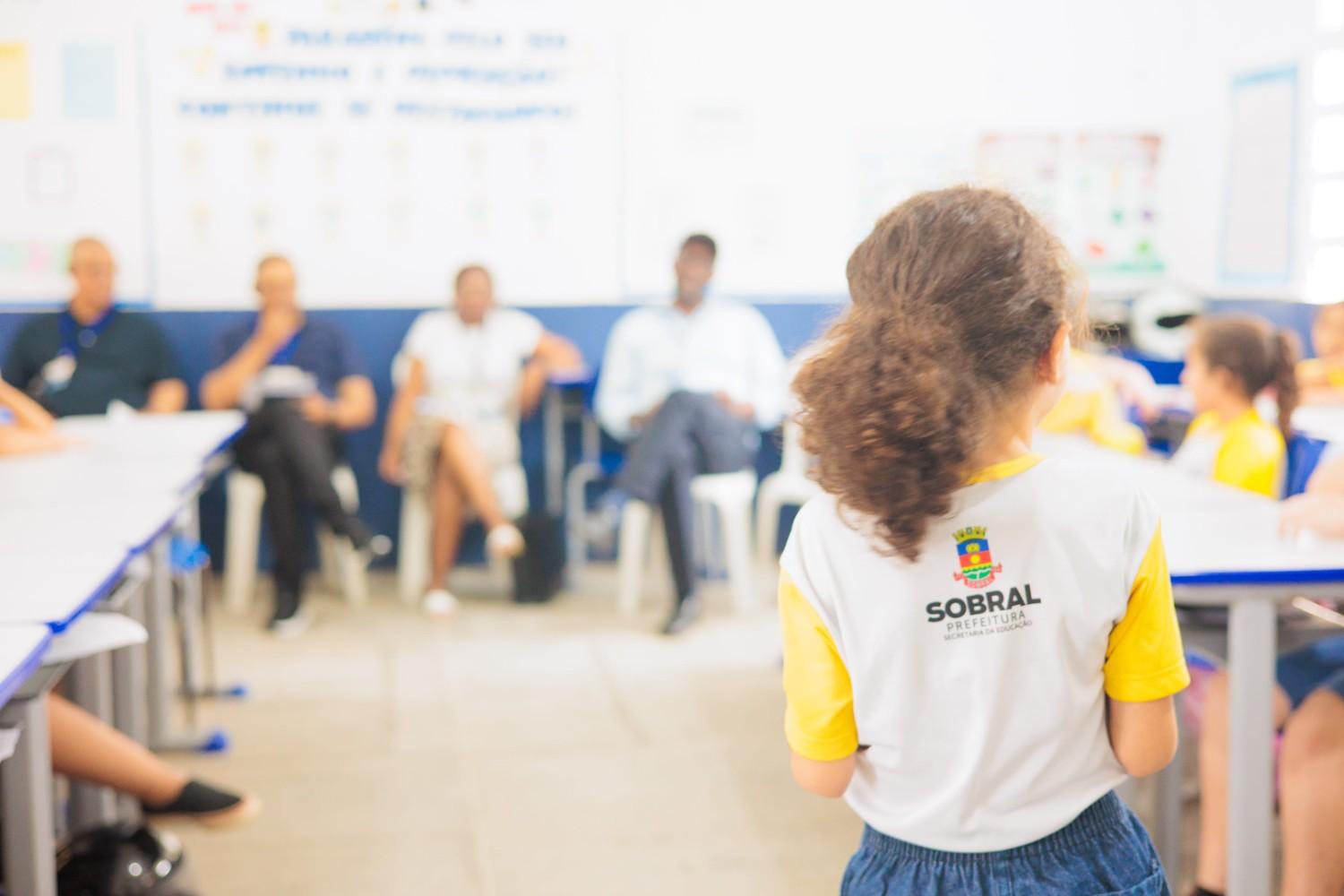
In a small municipality in Brazil, a bold commitment to foundational learning transformed one of the lowest-performing education systems into a global benchmark.
Sobral’s journey! from a context where most children could not read, to one of the top-performing education systems in Brazil, offers powerful lessons for countries like Kenya working to strengthen foundational literacy and numeracy.
Why Sobral Matters
Sobral is a municipality in the state of Ceará, Brazil. In the early 2000s, it faced deep poverty and extremely low learning outcomes. At the time, eight out of every ten children could not read.
Rather than accept this reality, local leaders made a deliberate and sustained commitment to foundational literacy. Over time, Sobral built a system anchored in clear learning goals, strong leadership, teacher support, accountability, and community engagement. By 2017, it ranked first in Brazil in both primary and secondary education.
What makes Sobral remarkable is not only the scale of its improvement, but also the consistency and discipline behind it. Its story continues to attract global attention because it shows that significant education reform is possible when systems align around learning.
Learning from Sobral: A Global Exchange
In August 2025, a delegation of 43 education leaders from Kenya, South Africa, and India travelled to Sobral for a week of learning, exchange, and reflection. Representing 25 institutions, the participants engaged in school visits, discussions with current and former political leaders, engagements with the Department of Education, and structured coalition-building sessions.
The purpose of the visit was not to copy Sobral’s model, but to understand the systems, leadership choices, and practices that made its transformation possible, and to reflect on what these lessons might mean for foundational literacy and numeracy in other contexts.
It is through this exchange that several insights emerged from Kenyan participants.
I learnt about benchmarks for foundational literacy, whereby Grade 2 learners are expected to be fluent in foundational literacy.
— Dr. Isaac Batoya Baraza, Teachers Service Commission, Directorate of Operations
Key Lessons from Sobral
1. Political leadership matters
One of the strongest lessons from Sobral is the role of political leadership in sustaining reform. Its transformation was not the result of isolated projects, but of long-term commitment from leaders who kept foundational learning at the centre of the education agenda.
Listening to the political leadership there, we got to hear from the mayor who led the reform and the mayors who came after him, and how they were able to continue with the legacy. That reminded me that it is possible to have leadership that is committed to this. For them, giving children a quality foundation was not an issue of privilege, but a rights issue.
— Virginia Ngindiru, Director, Foundational Skills
This continuity helped ensure that reform remained a shared public priority rather than a short-term political agenda.
We have the resources. What we need is political goodwill. If communities and leaders align around education, Kenya can succeed in what we have laid down in terms of education.
— Mr. Charles Kimaru, Teachers Service Commission
2. Teacher support must be continuous
Sobral’s system places strong emphasis on ongoing teacher development. Rather than relying on one-off workshops, teachers participate in structured support, planning, and coaching sessions every two weeks at school and zonal levels.
What fascinated me is that when the teacher was doing activities in class, learners with special needs were assisted by a teacher assistant. The teacher was very empowered, and every two weeks they had planning meetings. This kept them informed and strengthened what they were supposed to do.
— Dr. Jennifer Mokera, Kenya Institute of Special Education
This shows that teacher development works best when it is practical, regular, and embedded in the daily life of schools.
3. Accountability is built into the system
Accountability is one of the strongest threads in Sobral’s story. Teachers, school leaders, and education officers understand their responsibilities clearly, and parents are also part of the broader accountability environment.
One of the things we carried with us is the accountability that has been embedded in the system. The teacher is accountable to the learner, the teacher is accountable to the parent, but also the teacher is accountable to somebody who is a pedagogical instructional leader.
— Dr. Lydia Chege, Lead Ecosystem Building and Government Engagement
This kind of shared responsibility creates conditions where improvement is not optional, it is expected.
4. Presence and follow-up matter
A striking practice observed in Sobral was the pedagogy of presence. This goes beyond ensuring that teachers and learners are physically in school. It also means paying close attention to learner well-being, participation, and follow-up.
I was very excited when I noted that schools have adopted the pedagogy of presence, whereby they follow up on teachers and learners to ensure that they are in school at all times. When they notice learners who are absent, the school follows up by phone call to establish the reasons why they have not attended school.
— Fredrick Maoga, Quality Assurance and Standards Directorate, Ministry of Education
This approach reflects a culture where every learner matters and where schools actively respond when something is wrong.
5. Inclusion strengthens the whole system
Sobral’s inclusion of learners with disabilities in mainstream classrooms was another important lesson for participants. Teachers and assistants are equipped to support diverse learner needs, helping create classrooms where all children can participate meaningfully.
This reinforces an important principle: inclusive systems do not only support a few learners, they strengthen learning for everyone.
6. Communities and systems must align
Participants also reflected on how Sobral’s success comes from collective ownership. Political leaders, teachers, schools, parents, and communities all appear to share responsibility for learning outcomes.
Sobral does things which are obvious, but they do them very well. That region is not different from what we have in Kenya. What they have emphasised is political willingness, the community, the teachers, and everybody around Sobral thinking about education in terms of basic education.
— Joel Okindo, Kenya Literature Bureau
This is perhaps one of the most powerful lessons for Kenya: reform succeeds when it is not carried by one actor alone, but by a system working together around a shared vision.
What This Means for Kenya
Sobral’s experience shows that transformation is not necessarily about discovering new ideas. In many ways, it is about committing to what is already known to work, and implementing it consistently.
For Kenya, the lessons are clear. Sustained political commitment matters. Teacher support must be ongoing. Accountability should be embedded across the system. Inclusion must be practical. Data and assessment should inform classroom practice. And communities must be active partners in ensuring that every child learns.
Sobral does not offer a template to be copied wholesale. But it does offer a powerful reminder that education reform becomes possible when systems are aligned, leadership is steady, and foundational learning remains a clear priority.
Conclusion
Sobral’s story demonstrates that meaningful change is possible when leadership, schools, teachers, and communities work together around a shared goal.
For Mizizi Elimu Afrika and its partners, this reinforces an important truth that improving foundational learning is not about reinventing the system. It is about strengthening it with clarity, consistency, and commitment.