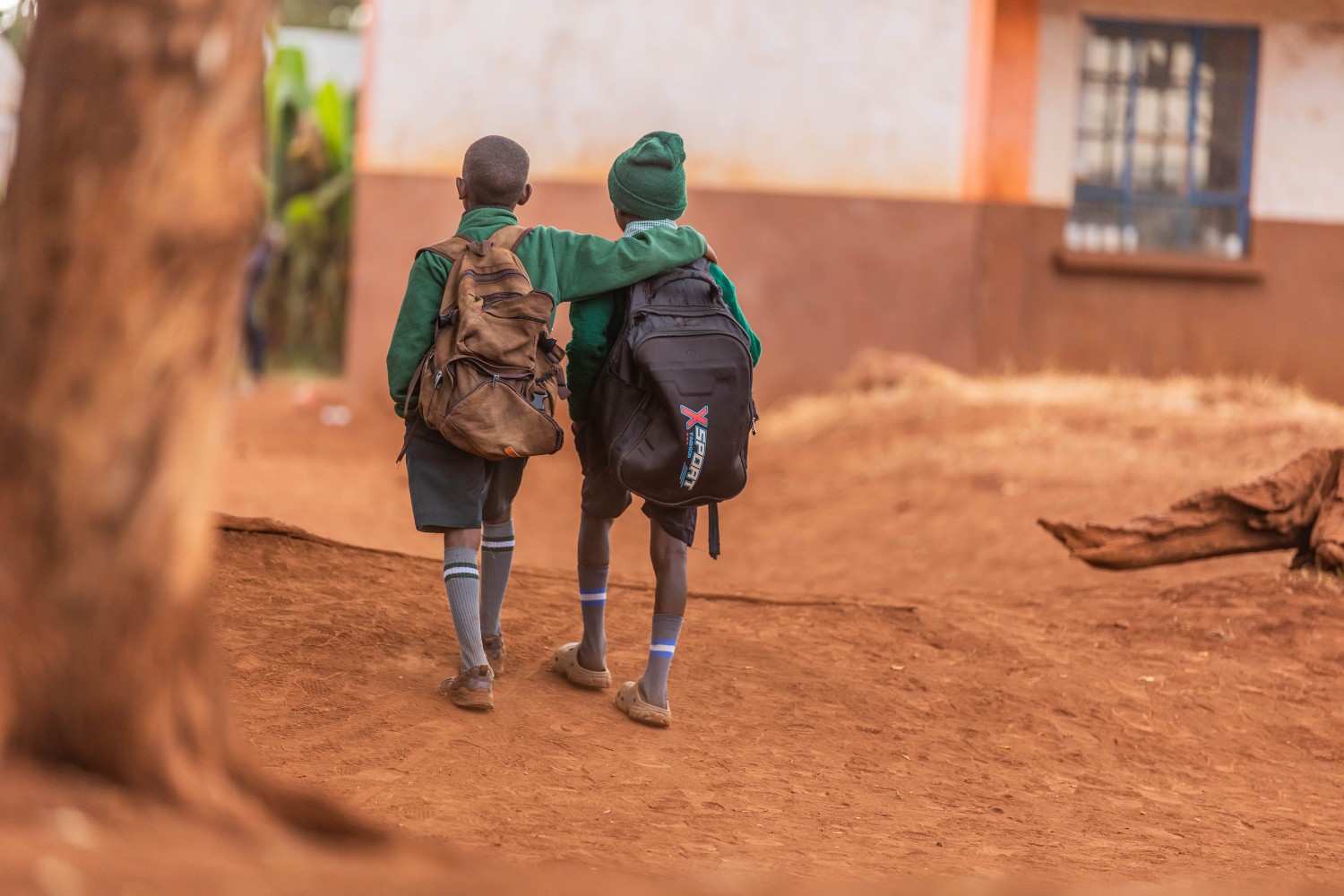
Africa is facing a quiet but devastating education crisis. Classrooms are fuller than ever, enrolment has surged, and millions more children are completing school. Yet beneath these gains lies a troubling reality, children are learning less.
Recent findings from UNESCO, UNICEF, and the African Union confirm the scale of the crisis. While tens of millions more children are enrolled in school compared to a decade ago, learning outcomes have barely improved. In fact, the evidence suggests regression. Nearly 4 out of 5 children aged 10 in Africa cannot read and understand a simple text or solve a simple mathematical task.
The illusion of progress.
Schooling has expanded, but learning has not kept pace.
At first glance, the numbers seem encouraging. Across Africa, enrolment has expanded dramatically, driven by free primary education policies and demographic growth. Over 110 million more children are in school today compared to 2015. Secondary school completion is also rising.
But schooling is not the same as learning. Data from UNICEF reveals that in many countries, only about 30% of Grade 3 learners can read at a basic level, and just 18% can perform basic numeracy tasks. In some parts of sub-Saharan Africa, fewer than 1 in 10 children achieve foundational skills on time.
Why children in Grade 3 can’t read
To understand why today’s children, struggle with basic literacy and numeracy compared to those in the 1960s–80s, we must confront a difficult truth: education systems have expanded faster than their capacity to deliver quality.
Overcrowded classrooms, underprepared teachers
Africa needs at least 15 million more teachers by 2030. But even where teachers exist, many lack adequate training, support, or instructional materials. A 2024 report by UNESCO dubbed “Better textbooks and teacher guides needed to improve foundational learning in Africa” notes that teachers are often “set up to fail” without proper guides or resources. In the past, classrooms were smaller and teaching was more direct even if access was limited. Today, one teacher may handle 60–100 pupils, making effective instruction and individual support extremely difficult.
The textbook crisis
The absence of learning materials remains one of the most damaging constraints. Research shows that having a textbook can improve literacy scores by up to 20%. Yet in many schools, children share outdated or irrelevant materials or have none. This makes children physically present in school but intellectually disengaged.
Language barriers
A child who cannot understand the language of instruction cannot learn effectively. Yet in many African countries, fewer than one-third of students are taught in their home language. This undermines comprehension at the most critical stage early grade learning. Research shows that education in the mother tongue is a key factor for inclusion and quality learning, and it also improves learning outcomes and academic performance. This is crucial, especially in primary school to avoid knowledge gaps and increase the speed of learning and comprehension. Additionally, mother tongue instruction empowers all learners to fully take part in society.
Hunger and poverty
A hungry child cannot learn. Millions of children attend school hungry, affecting concentration, memory, and participation. Only one in three African primary school pupils receives a school meal. Poverty also forces children into labour, reduces attendance, and limits parental support for education. These factors disproportionately affect rural and marginalized communities, widening inequality.
Weak early childhood foundations
In the 1960s–80s, fewer children attended school, but those who did often had stronger foundational preparation either through community structures or more focused instruction. Today, early childhood education remains underdeveloped across much of Africa. Children enter primary school without pre-literacy or numeracy skills, and the system fails to catch them up.
A system out of alignment
Another critical issue is systemic misalignment. Effective education systems require coherence between curriculum, textbooks, teaching practices, and assessments. Yet in many African countries, these elements operate in isolation. In most cases they are not even considered important as they are supposed to be.
The UNESCO highlights that foundational numeracy improves only when curriculum, materials, and teaching methods are aligned. Without this alignment, students receive fragmented and ineffective instruction. Compounding this is the lack of data: in many countries, there is no reliable information on learning outcomes for millions of children. Without measurement, there is no accountability.
The financing gap
Underlying all these challenges is a stark financial reality. Africa faces an annual education financing gap of $77 Billion. At the same time, many countries are investing less in education relative to population growth. For instance, in Kenya, School capitation has been decreasing over time including late disbursement of capitation which overstretches Schools resources and the ability of institutions to offer learning.
The result? Systems stretched beyond capacity, where expansion comes at the expense of quality.
Then vs now: what changed?
In the 1960s, 70s, and 80s, education systems in Africa were smaller, more selective, and often better resourced per student. While inequitable, they were more manageable. Today’s systems are more inclusive but without proportional investment, teacher support, or infrastructure. The result is mass schooling without mass learning.
The solution is not to scale back access but to rebalance priorities toward learning.
What Needs to Change
Ensure every child has access to high-quality, relevant textbooks
Prioritize mother-tongue instruction in early grades
Strengthen teacher capacity through continuous support and structured guidance
Expand school feeding programmes as part of education policy
Establish clear learning standards and regular assessments
A defining moment
Africa’s future depends not just on getting children into school, but on what they learn while they are there. With the continent’s working-age population expected to reach 600 million by 2030, the stakes could not be higher.
If current trends continue, millions of young people will leave school without the skills needed to participate in the economy or society. But with the right policies, investments, and political will, this trajectory can be reversed.
The goal is no longer just education for all it must be learning for all.
For Mizizi Elimu Afrika, this crisis reinforces the urgency of strengthening foundational learning systems across the continent.
Because a child who cannot read by Grade 3 is not just behind they are being left behind.