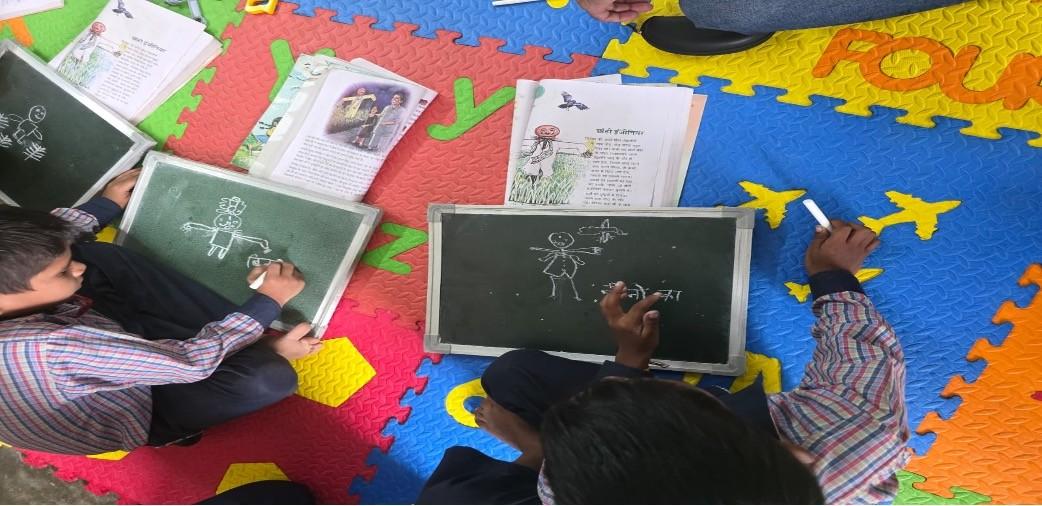
A child passes throueach stage once, so experiences, learning opportunities, care, and the environment we provide to facilitate achievement of level milestones are critical. Hence, the quote attributed to Maria Montessori, “A child will only be seven years old once,” is a clarion call to action. This simple fact has become the most urgent question: What are we, as a system, doing with that child? I've reflected on this question, and what troubles me most is not the lack of will or resources; it's that despite a system flush with oversight structures, Kenya continues to fail its most vulnerable learners at the Foundation Learning stage.
Kenya's education system includes devolved governance, county leadership, national structures, curriculum specialists, quality assurance officers, heads of institutions, and teachers. Despite this setup, the recurring question remains: Why are children still not learning?
The Accountability Paradox
Consider the layers of accountability in our system. At the county level, there is a Chief Officer for Education, a County Executive Committee Member, the County Assembly, and the Governor. The Teacher Service Commission ensures teachers are trained and deployed. County Directors of Education, sent by the ministry, oversee curriculum implementation. We have quality assurance and standards officers. We have curriculum support officers. We have school heads and classroom teachers.
By every measure, this is a system built for accountability. Yet children still transition from grade to grade without mastering foundational competencies. The system has multiplied its guardians, but forgotten its child!
The Evidence is Unambiguous
Every year, organizations like Usawa Agenda, KNEC, and KIPPRA, among others, deliver the same sobering message: Kenya's Foundation Learning outcomes are far below expectations. We've progressed from "weather reports" to more rigorous action-oriented data, yet the picture remains bleak. While recent gains in literacy offer some hope, numeracy remains alarmingly weak. And the real crisis lies hidden: children who transit from Foundational Learning to primary and to senior school without achieving basic milestones. We celebrate grades at the point of crisis, grade 9, when students who should have been reading and calculating in grades 1-3 are finally identified as non-literate.
Shifting the Focus: From System to Child
To change this, we must shift our mindset entirely. The system needs to move from celebrating structures to celebrating results, learning outcomes that matter to the child. This requires three urgent shifts:
Focus on the earliest years. Early childhood development and pre-primary are not optional; they are foundational.
Create seamless transitions. The move from pre-primary to grade one, and crucially, from grade three to grade four, are critical moments. Children who fall behind here rarely catch up.
Align all players around one goal: the child. Universities conducting research on Foundation Learning must coordinate with teacher training colleges, with the Kenya Institute of Curriculum Development, and with teachers in classrooms, not as separate entities, but as an integrated ecosystem.
We also need an honest assessment at every point. The National Assessment and Examinations Council (NAEC) and other evaluating bodies must provide real-time data on whether children are gaining milestones, not just produce scores after the damage is done. If we know a child hasn't achieved grade one literacy standards by the end of grade one, we can intervene immediately, at that moment not years later when the gap has become unbridgeable.
A Call to Collective Action
This is not about adding more committees or creating new structures. It's about making every existing player, teachers, administrators, governors, ministry officials, researchers, and civil society, answerable to one measure: Did the child learn? This requires a fundamental reorientation of how we engage with our education system.
This is a time for everyone in the education ecosystem to ask: What legacy are we building? Are we delivering to Kenya's children? Or are we simply maintaining an elaborate system of accountability to ourselves?
The Competency-Based Curriculum framework promises that every child has potential. Let's finally prove we believe it.
Dr. Wangui Lydia Chege is the Lead Ecosystems Building and Government Engagement at Mizizi Elimu Afrika