23rd April is World Book Day, a moment to celebrate not just books, but the power they hold.
The power to name the world.
The power to imagine beyond it.
And the power to place knowledge in the hands of a child.
As we celebrate authors today, I find myself thinking about reading itself, and what happens when children are given the chance to read early, often, and with joy.
There is reason for hope. The latest foundational learning assessments in Kenya show that literacy outcomes have improved, even if only marginally, between 2023 and 2025. In a time when so much feels uncertain, that progress matters. It reminds us that change is possible.
In Kirinyaga County, that hope feels even more tangible. Recent learning assessments place Kirinyaga among the top-performing counties in English language activities, with 62% of learners achieving benchmark proficiency, well above the national average.
But behind every statistic is a story.
I still remember the early days of the Napenda Kusoma initiative in Kirinyaga. One headteacher shared how, in the absence of class readers, they turned to whatever books were available in storage and put them into children’s hands.
“Since we did not have class readers, I went to the store and got old books, gave them, as THE still remains THE” - Headteacher
That moment has stayed with me. Because reading does not begin with abundance, it begins with belief.
A teacher who cares.
A child with a book.
A page turned.
A word recognized.
A world opened.
Reading builds knowledge and curiosity. It expands vocabulary. It strengthens confidence, both spoken and written. It helps children connect ideas, make meaning, and grow their minds.
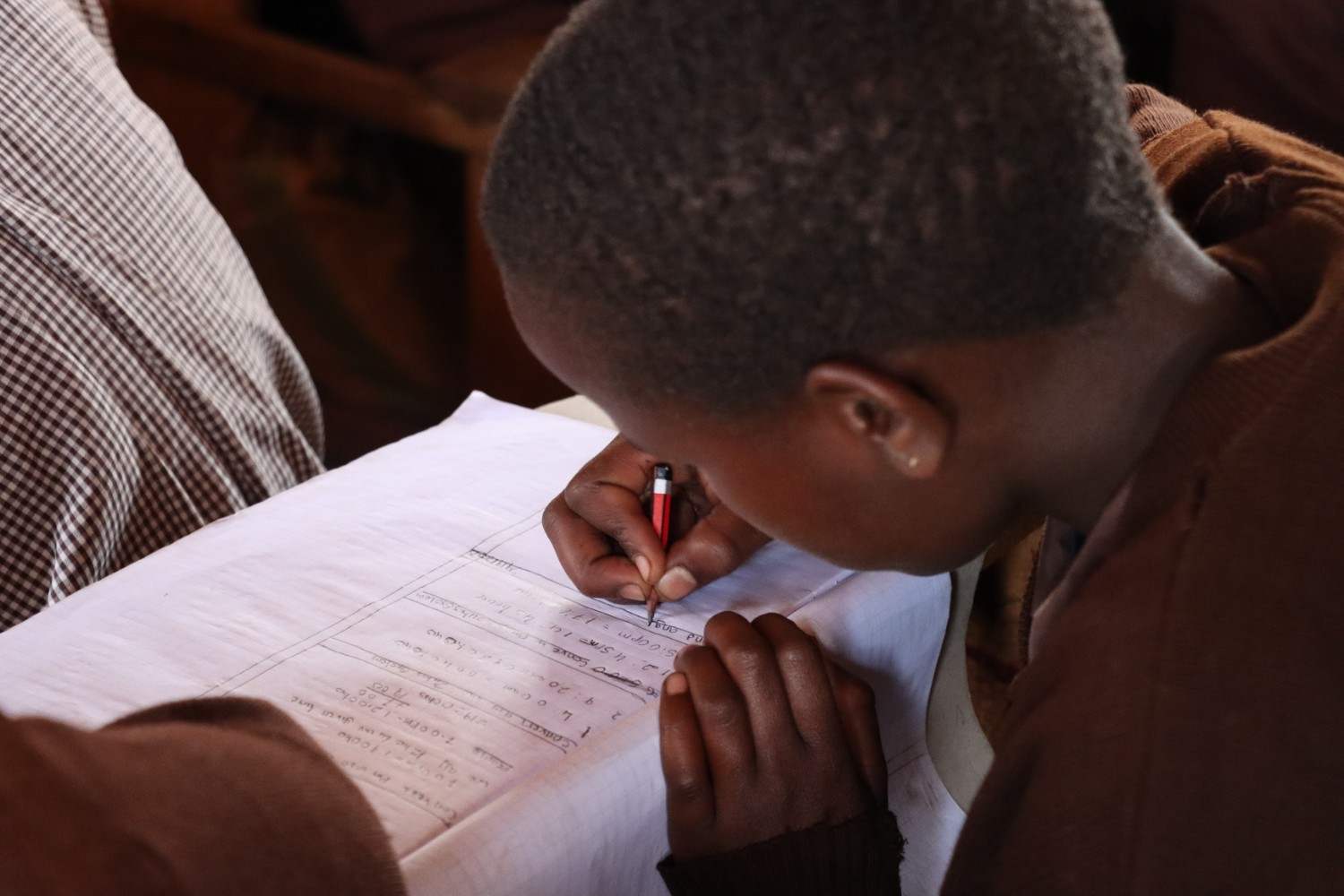
I remember, with deep nostalgia, the Tusome finger and the magic of learning to read. Today, as I watch my six-year-old grandson trace words with his finger, blending sounds and bravely navigating new vocabulary, I am reminded that reading is more than a classroom skill. It is the making of voice, confidence, and possibility.
And books do even more.
One Sunday, a woman at church offered me two old storybooks from Turkana. I bought them, simply because it felt like a worthy cause. Later, as I read one, a colleague noticed and laughed, surprised that I was reading a children’s book. But then she said her son would love it. I passed it on.
When she returned it, she told me they had been reading it together and enjoying it.
That is the quiet magic of a book.
A book can teach a child to read.
A book can spark imagination.
A book can create shared moments between parent and child.
A book can outlive the classroom.
So this World Book Day, let us celebrate our authors.
Let us celebrate teachers who improvise, parents who read aloud, and children who keep trying.
Let us keep putting books into small hands, and big dreams into young minds.
Because when a child learns to read, we do not just improve literacy.
We expand what is possible.