As Kenya continues to implement Competency-Based Education (CBE), strengthening systems that support accountability, continuous improvement, and evidence-based decision-making remains critical to ensuring quality learning outcomes for all learners. Quality Assurance and Standards Officers play a central role in this process by helping schools assess performance, identify gaps, and implement improvements that enhance teaching and learning.
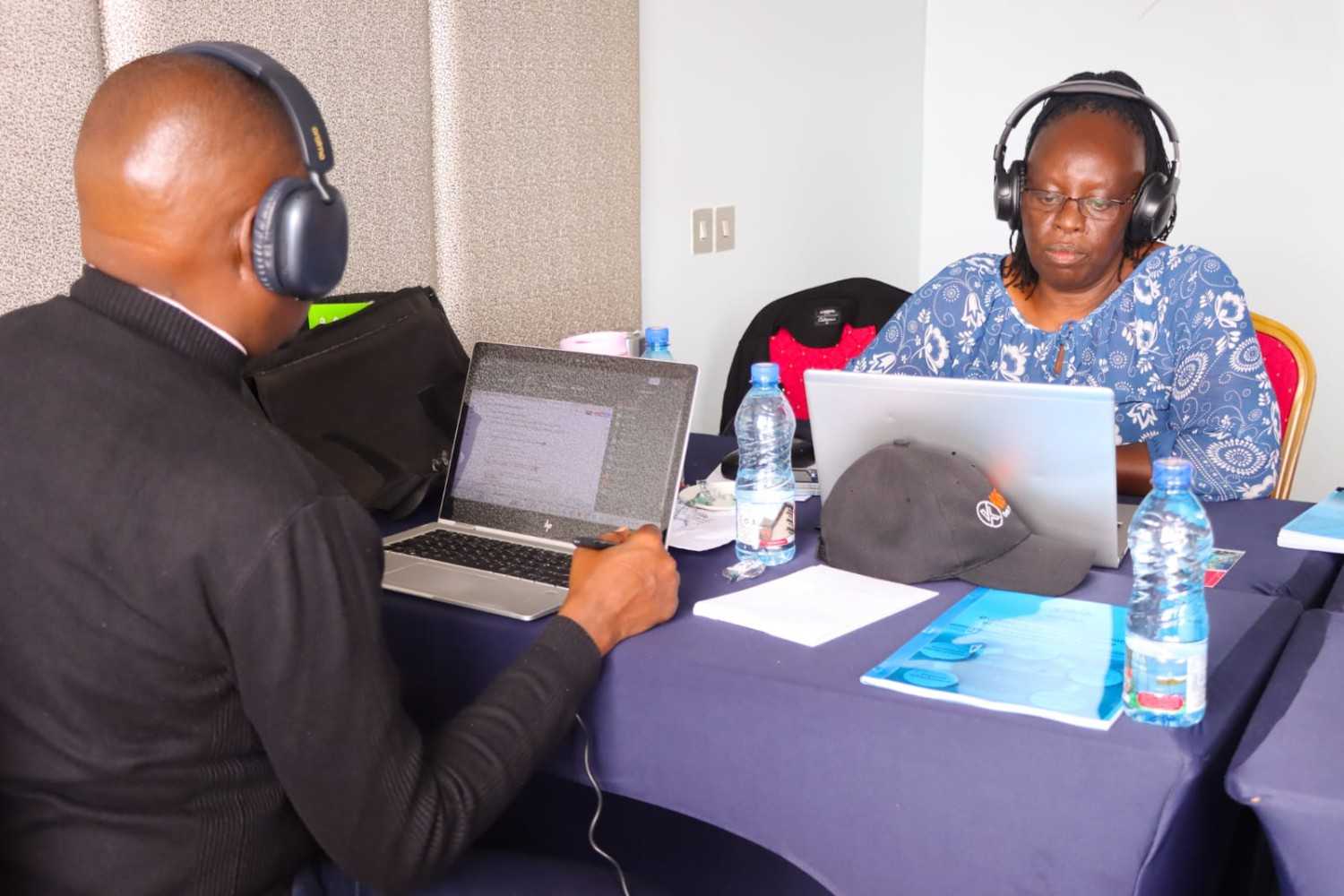
To strengthen this capacity, the Ministry of Education, through the Directorate of Quality Assurance and Standards (DQAS), in collaboration with Mizizi Elimu Afrika, conducted a three-day virtual training programme for 575 Quality Assurance and Standards Officers (QASOs) on the Institutional-Based Quality Assurance (IBQA) Framework and the use of digitized assessment tools.
The training forms part of a broader national effort to strengthen quality assurance systems across Kenya's education sector. Through the revised IBQA Framework and digital assessment tools, officers are being equipped with the knowledge and practical skills required to support schools in conducting self-assessments, improving accountability, and promoting continuous quality improvement. The initiative also seeks to strengthen data-driven decision-making by enabling timely access to quality assurance information at school, sub-county, county, regional, and national levels.
Speaking during the training, Joseph Wambua, Director in the Directorate of Quality Assurance and Standards, described the programme as a significant milestone in the implementation of the revised National Education Quality Assurance and Standards Framework.
We are training 575 Quality Assurance and Standards Officers from across the country on Institution-Based Quality Assurance (IBQA) for schools in Kenya. IBQA is part of the implementation of the revised National Education Quality Assurance and Standards Framework,
He noted that the framework and the accompanying guidelines developed in collaboration with Mizizi Elimu Afrika were critical in ensuring consistency and quality across basic education institutions.
The initiative builds on the Ministry’s ongoing efforts to strengthen education quality through evidence-based monitoring, assessment, and continuous improvement. The National Education Quality Assurance and Standards Framework was first developed in 2021 and has now been reviewed to ensure it remains responsive to emerging priorities in the education sector.
We began this journey with the development of the National Education Quality Assurance and Standards Framework in 2021. In line with best practice, we have reviewed and revised the framework five years later to ensure it remains relevant and continues to support the achievement of Kenya’s educational goals effectively,
To support implementation, the Ministry has developed the Institutional-Based Quality Assurance (IBQA) Guidelines alongside a comprehensive Quality Assurance and Standards Handbook that provides practical guidance on quality assurance processes, expectations, roles, and responsibilities within basic education institutions.
A key feature of the revised framework is the integration of digitized assessment tools designed to strengthen data-driven quality assurance processes. The tools will enable real-time access to assessment data and reports at sub-county, county, regional, and national levels.
The rollout of the revised framework comes at a critical time as Kenya continues implementing Competency-Based Education (CBE) as part of broader education reforms. Wambua noted that the revised framework incorporates recommendations from the Presidential Working Party on Education Reforms and addresses several areas that were not adequately covered in the 2021 edition.
These include important aspects such as Parental Empowerment and Engagement, as well as other components essential to the successful implementation of Competency-Based Education. These elements are now comprehensively integrated into the revised framework, guidelines, and assessment tools,
The Institutional-Based Quality Assurance Framework represents a shift towards strengthening accountability and promoting continuous quality improvement within schools. Through the framework, schools are empowered to assess their own performance while Quality Assurance and Standards Officers provide professional oversight, validation, and support to ensure that standards are maintained across the education sector.
Throughout the training, participants are being equipped with the knowledge and practical skills required to effectively implement the IBQA Framework and utilize digital assessment tools.
A key message emerging from the training is the importance of professionalism, objectivity, and integrity in quality assurance work. Facilitators emphasized that the success of the framework will depend not only on the tools available but also on the commitment of officers to uphold the highest standards of ethical practice.
Trainer Mohamed Rashid challenged participants to embrace their responsibility as guardians of quality within the education system.
You are the custodians of quality. You have the responsibility of verifying the information that you collect and ensuring objectivity in your assessments.
He further stressed the need for evidence-based reporting, noting that quality assurance decisions must always be informed by verifiable facts and observations.
“In quality assurance, you do not provide information that is not evidence-based.
Participants also acknowledged the transformative potential of the IBQA Framework in strengthening educational standards across the country. According to participant Micah Njugunah:
The IBQA is a very important aspect that will ensure that quality education is not compromised in all our institutions.
The activity aligns with Mizizi Elimu Afrika’s strategy to strengthen education systems and institutional capacity to produce quality outcomes. It is expected to enhance the competence of Quality Assurance and Standards Officers in conducting data-driven quality assurance, improve consistency in assessments and reporting, and strengthen coordination among teams implementing the IBQA Framework.