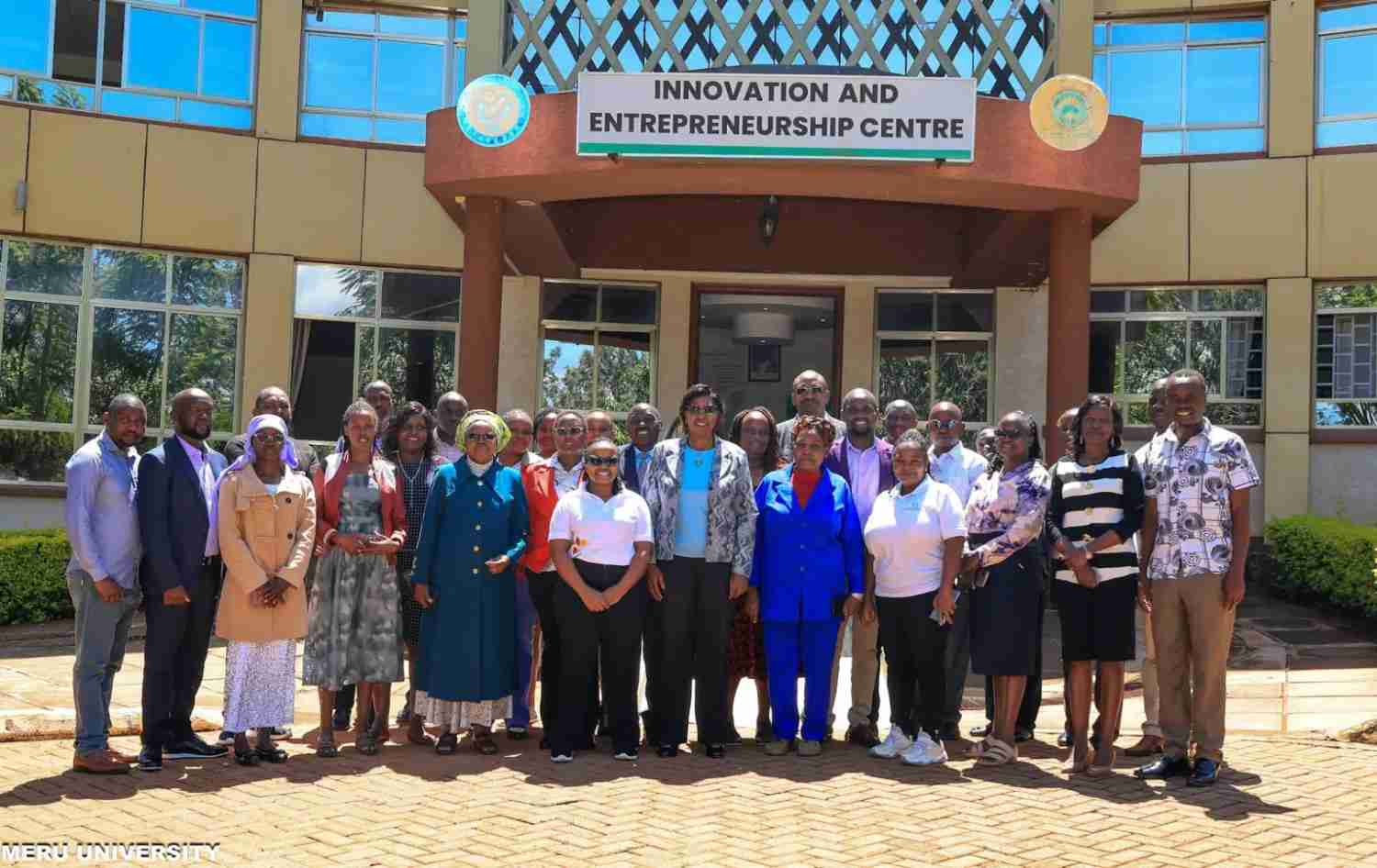

In August 2025, a delegation of global education leaders gathered in Sobral, Brazil, to learn from one of the most widely recognised public education reforms. Exactly one year later, in August 2026, the Lighthouse Initiative convened its second international study tour, this time in India. The immersion was designed as an interactive, catalytic space, a peer-exchange forum where participating countries could explore large-scale national missions, debate what is working (and what is not), and identify transferable, scalable practices for early grade education.
For the Kenyan delegation – whose country is navigating a major transition for pre-primary (PP1–PP2) and lower primary (Grades 1–3) learners, the journey offered far more than structural blueprints. It offered an encounter with the “soul” of education reform.
A Moral Compass for Reform
At the opening ceremony of the immersion, delegates were invited to look inward, confronting a series of profound personal and professional questions:
What do I want to exist in the world, even after I am gone?” My response: peace and laughter. “What is my part in making this happen?” Teaching the value of appreciation, responsibility and love for one another, I wrote in my notebook. “When did I feel I was living this purpose?” I am not sure I answered that one.
Too often, large-scale education reforms are treated as cold, bureaucratic exercises monitored through sterile spreadsheets and distant administrative metrics. The Indian model of foundational literacy and numeracy (FLN), implemented nationally under the NIPUN Bharat mission, challenges this paradigm. It shows that improving classrooms must begin by transforming the mindsets of the leaders who govern the system.
In devolved systems, where national policies often clash with county or provincial mandates, jurisdictional gridlock is common. During the intergovernmental coordination discussion, a senior member of the Kenyan delegation offered a powerful guiding principle for cutting through these standoffs:
Let us be driven by a moral obligation to the child. Every time we feel challenged by a decision of National and County mandate, bring the child to the boardroom.
The “Happy School” Paradigm: Learning as a Joyful Invitation
Across the states visited, Haryana and Uttar Pradesh, along with an account from Telangana, the standard school environment has been deliberately re-engineered. Moving away from rigid, mechanical compliance, schools are designed to be “happy, welcoming and attractive places”, characterised by peace, safety and laughter.
This is not a sentimental choice; it is a core operational strategy. In early grade learning, student engagement is not optional, it is the baseline. As one Director of Teacher Professional Development told the delegation:
Learning will happen in places of happy children; happy children learn.
This culture of joy is put into practice by leaders who actively “onboard others” down the administrative hierarchy, cultivating personal responsibility for every child. As Dr Yogi, a senior education leader in Telangana, urged her team:
“Breathe in FLN, breathe out FLN. Everyone wants to do good; treat them with support and motivation. As officers, do we own each child? Why do parents send their children to our schools? It is because of trust, and we must safeguard this trust.”
The 120-Minute Mentorship Cycle: Turning Inspectors into Learning Allies
One of NIPUN Bharat’s most significant institutional achievements is the redefinition of the “middle-tier” officer. Historically, sub-district administrators functioned as punitive inspectors, ticking boxes and generating anxiety. Under India’s “Mission Mode” governance, academic support mentors (known as Academic Resource Persons, or ARPs) are kept strictly pedagogical. They do not handle budgets, and they are insulated from administrative policing.
In districts such as Ghaziabad (Uttar Pradesh) and Kurukshetra (Haryana), ARPs conduct regular, non-judgemental school support visits. Each monthly visit follows a structured 120-minute cycle: classroom observation (40 minutes), random learner assessment (20 minutes), direct teacher feedback (40 minutes) and coordination with the head of institution (HoI) on improvements (20 minutes).
Built-in Safeguards for Sustainable Mentorship
Two design elements prevent this mentorship model from becoming transactional or exhausting:
The Monthly Cadence: ARPs visit each school only once a month. This deliberate spacing gives teachers “breathing room” to practise the feedback and work on improvement areas before their next observation.
The Rotational Lifespan: Mentors serve in their roles for approximately three years, after which they return to active classroom teaching in their original schools. This prevents the emergence of an elite administrative class and ensures mentors remain grounded in the daily realities of the classroom.
The Power of “3 Ts” Alignment: Curricula that Breathe Together
In the state of Haryana, curriculum design, classroom teaching and the academic calendar are closely synchronised. This is governed by the “3 Ts” alignment principle: aligning the Textbook, the Teacher Guide and the Test so that each speaks directly to the others.
The Structured Academic Calendar
At the Kirmach Village Model School in Haryana, the school year is structured around learner readiness rather than the pressure of rushing through a textbook:
April – May (Revision and Remediation): The academic year opens with a dedicated remediation phase. Teachers focus entirely on consolidating the previous grade’s benchmarks to ensure that all learners are ready to progress.
June (Summer Home Learning): During the summer break, parents are engaged through a dedicated home-learning app, which sends targeted, play-based messages to prevent summer learning loss.
July (New Content Commencement): The new grade-level curriculum officially begins only in July, once teachers are confident that foundational gaps are closed.
February – March (Final Assessment): Final evaluations measure achievement against state-aligned benchmarks.
Structured Weekly Classroom Routines
Lessons follow a set weekly progression: four days of direct instruction and practice, a fifth day dedicated to formative assessment with immediate in-class remediation, and a sixth day for structured review. In addition, to prevent textbook leakage and track delivery, free primary textbooks are shipped from state to block level, collected by head teachers and tracked statewide using QR codes.
Mapping the Pivot: What This Means for Kenya’s Competency-Based Education
During the systems thinking and SWOT sessions, the delegation mapped India’s NIPUN Bharat architecture against Kenya’s implementation of Competency-Based Education (CBE).
While recognising Kenya’s significant achievements, including a 1:1 textbook-to-learner ratio in primary schools and high learner attendance, the delegation identified critical operational gaps and outlined priorities for action:
Rebalancing the Middle Tier
In Kenya, Curriculum Support Officers (CSOs) are overburdened with administrative duties and expanded policing roles, which limits their capacity to offer pedagogical support. CSO zones are also large and diverse, and officers lack travel facilitation to visit schools regularly.
The Pivot: Kenya needs to revitalise School-Based Teacher Support (SBT) and zonal cluster learning sessions (communities of practice, or CoPs), while building a dedicated CSO travel and movement budget into the Teachers Service Commission (TSC) budget. Sub-county Quality Assurance and Standards Officers (QASOs) should also be deployed to support CSOs in classrooms.
Overcoming the Teacher “Promotion Trap”
A major systemic challenge in public schools is the “promotion trap”, where outstanding primary classroom teachers are promoted to head of institution (HoI) or administrative roles based purely on seniority. This creates a damaging paradox: the system gains a poor administrator while losing its best teacher.
The Pivot: Kenya may need to professionalise school leadership. The delegation saw this in Brazil and again in India, where experience and a pass in the Teacher Eligibility Test (TET), which tests both pedagogical and administrative competence, are mandatory.
In addition, Institutional-Based Quality Assurance (IBQA) must be operationalised, empowering HoIs to actively observe and support early grade classes.
Streamlining the Curriculum and Institutionalising Remediation
Currently, Kenya’s lower primary curriculum is dense, spanning nine learning areas, and lacks a standardised school-level remediation policy or formal “talking walls” in classrooms.
The Pivot: Moving forward, Kenya may need to prioritise reducing the lower primary curriculum from nine learning areas to three or four core areas to prevent cognitive overload. It also needs to finalise its national Foundational Learning Guidelines, institutionalise structured school-level catch-up periods, and embed and institutionalise KISRAT ( Kenya school readiness assessment tool)
Conclusion: A Shared Future
A mayor in the visiting Brazilian delegation summed it up:
Only through education do you prepare a new future. Education is the family, school, social environment, and community.
Improving foundational learning is a mission, not a project. By combining rigorous, aligned systems with a warm, child-centred moral vision, we can build classrooms where children do not merely memorise, but understand, grow and laugh.