Our Pathways to Change

How We Turn Evidence into Lasting Systems Change
Lasting change does not happen through single projects or linear steps. It happens when systems shift — and when the people within them are supported to lead that change over time.
Guided by Vision 2040, our work is delivered through five mutually reinforcing interventions. Together, they translate evidence into action, strengthen education systems from within, and build the collective capacity required for impact at scale.
These interventions are not sequential. They operate together, responding to real system conditions and evolving as contexts change.
How the Five Interventions Work Together
Evidence informs policy. Policy enables system reform. Innovation strengthens practice. Systems embed change. Ecosystems sustain it.
Together, these five interventions form Mizizi Elimu Afrika's pathway to impact, enabling us to strengthen foundational skills, transform education systems, and build the collective capacity needed to catalyse improved foundational learning at scale for 10 million learners across 10+ countries by 2040.


Our Theory of Change
Why systems matter:
Mizizi Elimu Afrika believes that lasting improvements in learning only happen when systems change from within. Children do not gain strong foundations through isolated projects or short-term fixes. They gain them through effective public education systems, informed by evidence and supported by connected, capable ecosystems.
Our theory of change is simple and deliberate:
If we centre the most excluded learners, strengthen systems from within, and nurture a values-based ecosystem, then all children can gain the foundational skills to learn, relate, and thrive.
What sets us apart
How We Pursue Change
What distinguishes Mizizi Elimu Afrika is not just what we do, but how we do it.
We work with and through government, recognising that only public systems can reach every learner equitably.
We treat evidence as a public good, embedding it into policy, practice and accountability, not confining it to reports.
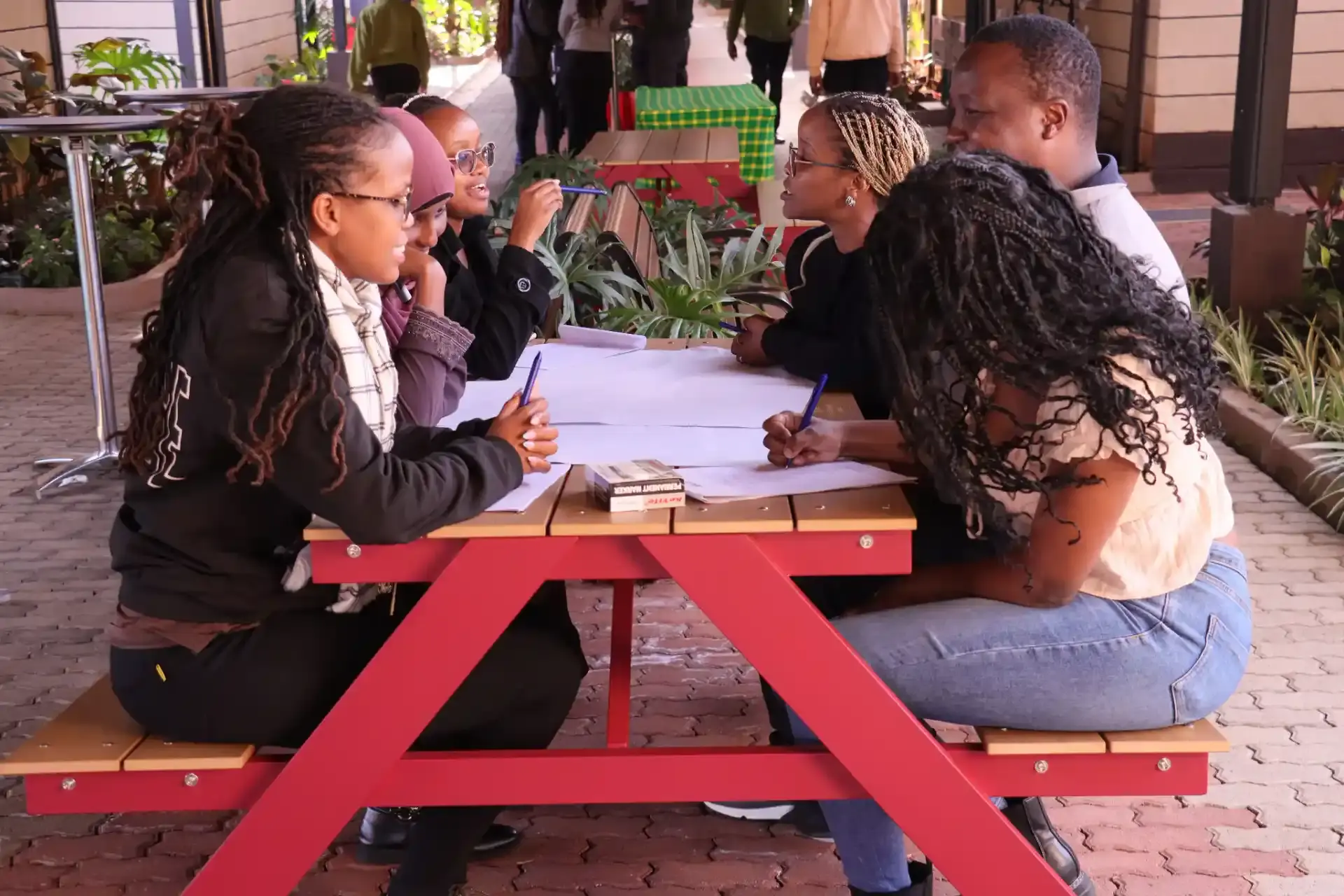
We use innovation as a learning tool, enabling systems to test, adapt and adopt what works.
We invest in ecosystem building, strengthening African-led leadership so reform is shared and sustained.
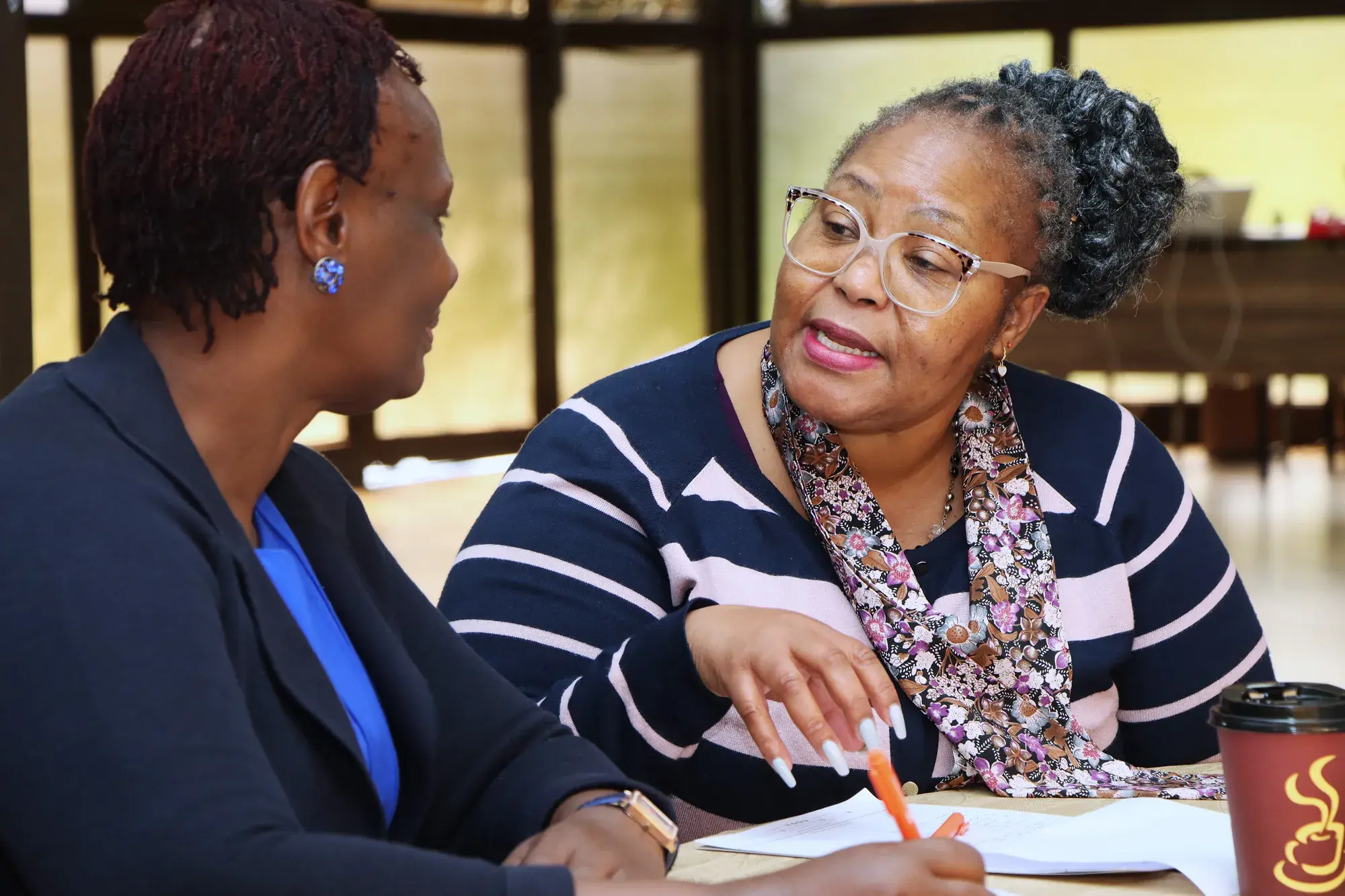

We remain power-aware and equity-centred, ensuring children and communities furthest behind shape the solutions that affect them.
Our role is catalytic. We enable others to lead, while strengthening the conditions that allow change to endure.

The Five Interventions
1. Training and capacity strengthening
Building the human capability that systems depend on
Education systems only change when the people within them are equipped to lead that change.
At Mizizi Elimu Afrika, training and capacity strengthening is about building practical, relational and values-based capability so reforms are not just designed, but lived in classrooms, schools, families and communities.
2. Research and evidence use
Making evidence work for systems, not shelves
Evidence only matters when it shapes decisions.
3. Technical support
Shifting priorities, ensuring reform reaches classrooms
Policy is where scale happens but only when reform is embedded, resourced and owned.
4. Relational convening
Embedding change where it can last
Lasting systems change begins with relationships.
Relational convening is how we bring people, evidence and power together to shift systems from within. We create trusted spaces where government, educators, communities, researchers and partners can think, learn and act together over time.
5. Ecosystem building and collective impact
From isolated actors to shared movement
No single organisation can transform education systems alone.